11.9.2.1
Named terraces fronting an existing type 1 or type 2 Street which do not have their own access or service road should be entered as a PAO. A type 4 Street should not be entered for a terrace. For the exception to this rule, see Section 11.9.2.9. A Parent Record must be created to represent the terrace, (note the SAO must be null). Therefore a BLPU must be inserted to represent the Child Records as follows:
SAO_TEXT
PAO_TEXT
“Railway Terrace”
STREET
“Station Road”
11.9.2.2
All individual premises within the named terrace must then be entered as children of the Parent property by using the SAO, for example:
PARENT_UPRN
123400000010
SAO_TEXT
“Rose Cottage”
PAO_TEXT
“Railway Terrace”
STREET
“Station Road”
11.9.2.3
If premises on the terrace are further subdivided, then grandchild BLPUs must be created with the appropriate PARENT_UPRN and either the SAO and PAO Record of all hierarchical levels. Additional levels of Addressable Object are managed as in Section 11.9.1 above, as follows:
Example 1
PARENT_UPRN
12340000011
SAO_TEXT
“Flat 1 Rose Cottage”
PAO_TEXT
“Railway Terrace”
STREET
“Station Road”
Example 2
SAO_TEXT
PAO_START_NUMBER
28
STREET
“Brunswick Terrace”
11.9.2.4
In Example 2, a named terrace has its own access road (front or rear). The terrace name must be created as a type 1 or a type 2 Street in the ASG. Each property within the terrace must then be created as a BLPU on that Street.
11.9.2.5
If a collection of buildings has a collective name the inclusion of the premises number in the PAO description shall not be used. A Parent Record must be created for the collective name and a Child Record for any other BLPUs referencing it, for example:
3
Railway Cottages
N
3
“Railway Cottages”
Y
3 Railway Cottages
N
11.9.2.6
If a legacy address appears to relate to a collection of properties but describes a stand-alone property, then it is acceptable for the PAO_TEXT to begin with a number. For example, A single property addressed as “1 Grove Cottage” may be recorded as follows:
“1 Grove Cottage”
Y
11.9.2.7
If this is a single structure containing more than one BLPU, then the rules described in Section 11.9.2.5 apply.
11.9.2.8
The example described in Section 11.9.2.6 is an exception to the Health Check validation rules. For details of how to report a Health Check exception to GeoPlace, see Appendix K.
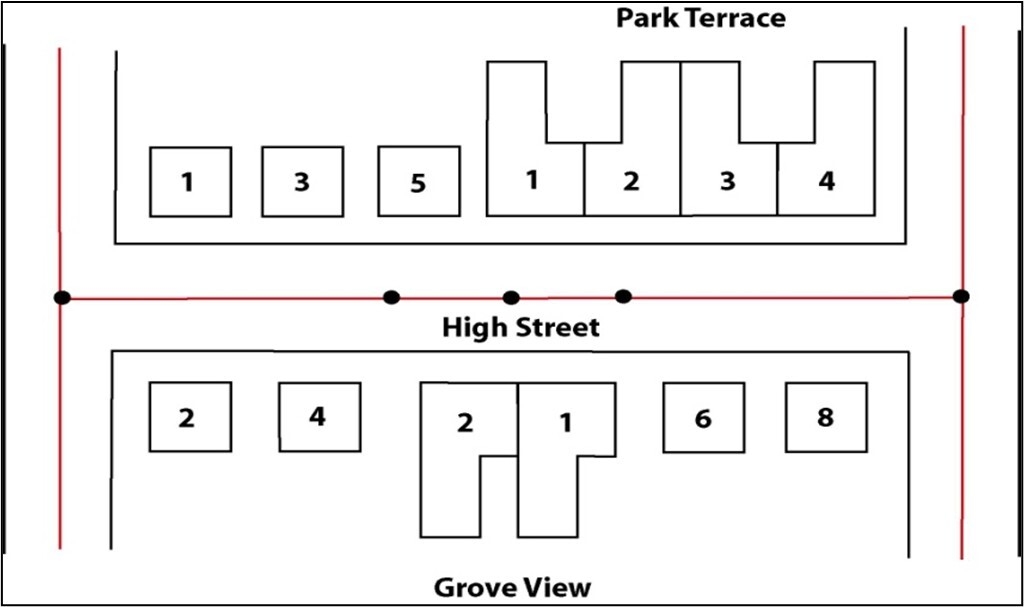
Figure 16 - Type 1 Street Name Park Terrace
11.9.2.9
Where there is a legacy case of a terrace officially named as a type 1 Street existing alongside another officially named type 1 Street, then a type 1 Street may be created for the terrace. The type 1 Street for the terrace must be set with Street STATE = 5 – Street for addressing purposes only. For an example see Figure 16.
11.9.2.10
If a terrace is created as a type 1 Street, the Street alongside which it exists must not be designated as a type 2 Street. This is because if a Street is officially named, the official name applies to the whole width of the Street unless the other side has an official name.
11.9.2.11
If a named terrace appears to run alongside a carriageway but in reality is separated from the main carriageway, for example by being on a different level and if there is no access from one to the other, then that terrace should be recorded as a type 1 Street.